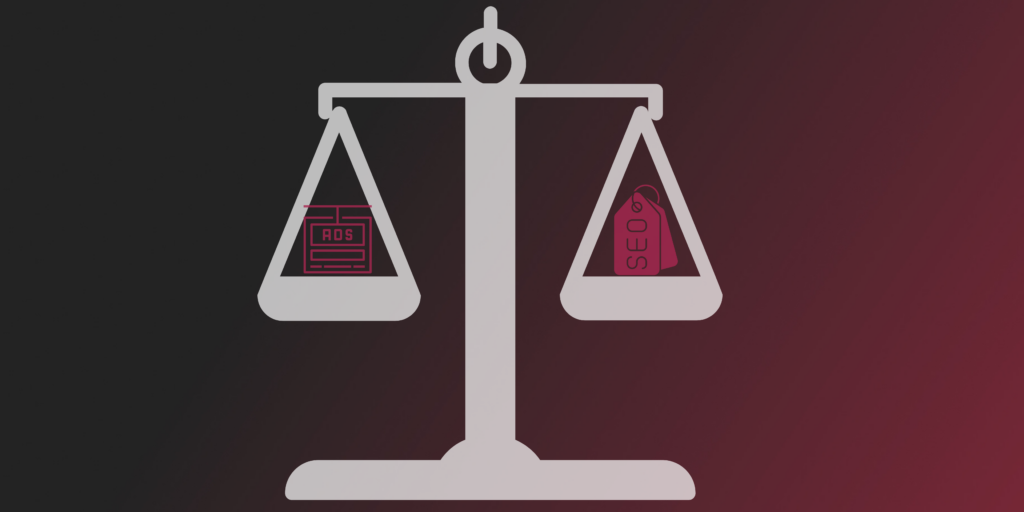
Many small business owners treat SEO and paid advertising as competing strategies.
Should you invest in long-term organic rankings or pay for immediate traffic? Should you publish more content or increase your Google Ads budget? Which channel will produce the best return?
Here’s the insider secret: you shouldn’t have to choose.
The strongest digital marketing funnels use SEO and paid ads together, assigning each channel a specific role in guiding potential customers from their first search to their final decision.
Paid advertising creates immediate visibility and generates valuable data. SEO builds authority, answers important questions, and captures demand over time. When the two strategies share insights, messaging, and conversion goals, they become far more powerful than either one operating alone.
Here’s how small businesses can build a cohesive funnel that takes advantage of both.
Stop Thinking in Channels and Start Thinking in Customer Stages
The customer journey rarely happens in a straight line.
Someone might discover your business through a Google Ad, visit your website, leave without contacting you, find one of your blogs several days later, read your reviews, and finally return through a branded search to request a quote.
If you only evaluate the last click, you may assume the final search deserves all the credit. In reality, several touchpoints helped create the conversion.
That’s why effective funnels are organized around the customer’s level of awareness—not individual marketing platforms.
A simplified funnel includes three primary stages:
Awareness: The customer recognizes a problem or begins exploring a need.
Consideration: The customer researches possible solutions and compares providers.
Decision: The customer is ready to call, schedule, request a quote, or make a purchase.
SEO and paid ads can support every stage, but each channel has different strengths.
Use SEO to Educate Customers at the Top of the Funnel
At the awareness stage, customers may not know exactly what service they need. They’re usually searching for information about a problem, symptom, goal, or concern.
A homeowner might search:
- “Why is my air conditioner making noise?”
- “How often should a roof be inspected?”
- “What causes standing water in a yard?”
These searches may not produce immediate sales, but they introduce your business to potential customers early in their research process.
SEO-driven content is especially valuable at this stage. Helpful blog posts, guides, FAQs, and educational videos can answer common questions while establishing your company as a trustworthy resource.
The goal isn’t to force an immediate conversion. It’s to give customers useful information and create familiarity with your brand.
When that person becomes ready to hire someone, your business is no longer a stranger. It is the company that already helped them understand the problem.
Use Paid Ads to Capture Immediate, High-Intent Demand
While SEO gradually builds visibility, paid search ads can place your business in front of customers who are ready to act now.
Someone searching “emergency plumber near me,” “Jacksonville commercial cleaning company,” or “schedule dental implants consultation” is demonstrating clear purchase intent. These are often excellent opportunities for Google Ads because the customer is actively looking for a provider.
Paid campaigns can help small businesses:
- Appear for valuable searches before organic rankings are established
- Promote priority services or seasonal offers
- Enter new markets quickly
- Test demand for new products or services
- Generate leads while SEO gains momentum
This immediacy makes paid advertising an effective bottom-of-funnel tool. Instead of waiting months to rank for a competitive keyword, you can begin attracting qualified traffic as soon as the campaign launches.
However, visibility alone isn’t enough. The ad must lead to a relevant, conversion-focused experience.
Create Landing Pages That Match Search Intent
One of the most common funnel mistakes is sending every visitor to the same general homepage.
A person who clicks an ad for commercial landscaping should arrive on a page specifically about commercial landscaping, not a homepage that also discusses residential maintenance, hardscaping, irrigation, and ten other services.
Each high-priority campaign should direct users to a page that reflects their search and continues the conversation started in the ad.
An effective landing or service page should include:
- A headline that matches the customer’s need
- A clear explanation of the service
- Benefits and differentiators
- Reviews, results, or other trust signals
- Answers to common questions
- A prominent call to action
- A fast, mobile-friendly design
These pages can support both paid and organic traffic. A well-developed service page may improve advertising conversion rates while also creating an opportunity to rank in organic search results.
That is one of the simplest ways to make SEO and advertising investments work together.
Let Paid Ad Data Guide Your SEO Strategy
SEO research can reveal how often people search for a topic, but paid campaigns provide faster insight into which searches actually produce leads.
Google Ads data can help identify:
- Keywords with strong conversion rates
- Search terms used by qualified customers
- Services generating the highest-value leads
- Headlines that attract attention
- Offers that improve response rates
- Locations with the strongest demand
- Questions or objections customers frequently raise
These insights can then shape your SEO strategy.
If a particular search term consistently generates qualified leads through Google Ads, it may deserve a dedicated service page or blog topic. If a certain benefit improves ad performance, that message could be incorporated into organic page titles, headings, and website copy.
This helps your SEO strategy focus on topics connected to actual customer behavior—not traffic volume alone.
Let SEO Improve Your Paid Campaigns
The exchange of information should work both ways.
SEO content can reveal which questions, concerns, and topics resonate most with your audience. Those insights can improve ad messaging and help you create more relevant landing pages.
A strong organic presence can also reinforce credibility after someone discovers your business through an ad.
Before contacting a company, potential customers may:
- Search for the company’s name
- Read reviews
- Explore its service pages
- Visit its blog
- Review case studies
- Compare it with competitors
If they find a useful, professional website with consistent messaging and visible expertise, they may feel more confident taking the next step.
Your ads may introduce the business, but your organic presence often validates it.
Use Remarketing to Reconnect With SEO Visitors
Not everyone who reads a blog or visits a service page will convert during the first session. That doesn’t mean the visit had no value.
Remarketing campaigns can help you stay visible to people who discovered your business through organic search but left without taking action.
For example, someone who reads a blog about signs that their roof needs repair could later see an ad promoting a complimentary inspection. A visitor who reviews your accounting services might see a testimonial or case study in a follow-up campaign.
This approach creates continuity between SEO and paid media.
SEO attracts the visitor by answering a question. Paid remarketing brings the business back into view when the potential customer is closer to making a decision.
The ads should feel like a relevant continuation of the customer’s research—not an unrelated interruption.
Match Your Calls to Action to Each Funnel Stage
Asking every visitor to “buy now” or “schedule today” can create unnecessary pressure, especially at the top of the funnel.
Your call to action should reflect how ready the visitor is to make a decision.
At the awareness stage, consider offering:
- A helpful guide
- A newsletter subscription
- A checklist
- A short educational video
- A cost or planning resource
At the consideration stage, encourage users to:
- Read a case study
- Compare available options
- Explore a specific service
- View customer testimonials
- Use a calculator or assessment
At the decision stage, use direct actions such as:
- Book a consultation
- Request a quote
- Call now
- Schedule an appointment
- Start an order
Giving customers an appropriate next step makes the funnel feel helpful instead of forced.
Build Shared Measurement Across SEO and Ads
SEO and paid advertising should not operate with completely separate definitions of success.
Both strategies should connect to meaningful business outcomes, such as:
- Qualified form submissions
- Phone calls
- Appointment bookings
- Purchases
- Revenue
- Cost per acquired customer
- Lead-to-customer conversion rate
Traffic, impressions, rankings, and clicks can help diagnose performance, but they do not automatically equal growth.
Accurate conversion tracking allows you to see how different touchpoints contribute to the customer journey. It also helps you distinguish between campaigns that generate activity and strategies that generate revenue.
Without shared tracking, SEO and paid ads may appear to compete for credit. With the right measurement system, you can see how they support one another.
Avoid These Common SEO and Paid Funnel Mistakes
Even businesses investing in both channels can struggle when the strategies aren’t connected.
Common problems include:
- Targeting completely different audiences with SEO and ads
- Sending paid traffic to weak or irrelevant pages
- Creating content around keywords that never produce qualified leads
- Failing to retarget organic website visitors
- Using inconsistent offers or messaging across channels
- Measuring clicks and rankings without tracking revenue
- Pausing SEO because ads are generating short-term traffic
- Stopping paid campaigns before organic visibility is established
The goal is not to make each channel do the same job. It is to assign each one a clear purpose within the larger customer journey.
The Best Funnels Create a Continuous Feedback Loop
The real insider advantage isn’t simply investing in SEO and paid advertising at the same time. It’s creating a system in which each strategy makes the other smarter.
Paid ads produce immediate search and conversion data. That data reveals which keywords, offers, and services deserve long-term SEO investment.
SEO builds a library of useful content and high-quality website pages. Those assets strengthen landing experiences, support remarketing, and give potential customers more reasons to trust the business after seeing an ad.
Over time, the relationship becomes a continuous feedback loop:
- Paid ads test keywords, audiences, and offers.
- Conversion data identifies the strongest opportunities.
- SEO content is created around proven customer interests.
- Organic traffic expands and builds brand authority.
- Remarketing reconnects with visitors who didn’t convert.
- Shared data improves the next round of campaigns and content.
That is how a funnel becomes more efficient instead of relying on isolated tactics.
Build a Smarter SEO and Ads Funnel With Fable Heart Media
SEO creates sustainable visibility. Paid ads create immediate opportunities. When both strategies are connected by consistent messaging, intentional targeting, effective landing pages, and accurate conversion tracking, they can guide customers through every stage of the buying journey.
At Fable Heart Media, our award-winning Jacksonville team helps small and medium-sized businesses build digital marketing strategies that work as one connected system. From Google Ads and Meta campaigns to SEO, content, landing pages, conversion tracking, and ongoing optimization, we focus on turning visibility into measurable growth.
Ready to stop treating SEO and paid advertising like separate investments?
Book a complimentary consultation with the Fable Heart Media team today. We’ll take a closer look at your current marketing funnel, identify gaps and opportunities, and help you create a strategy designed to reach more of the right customers.